




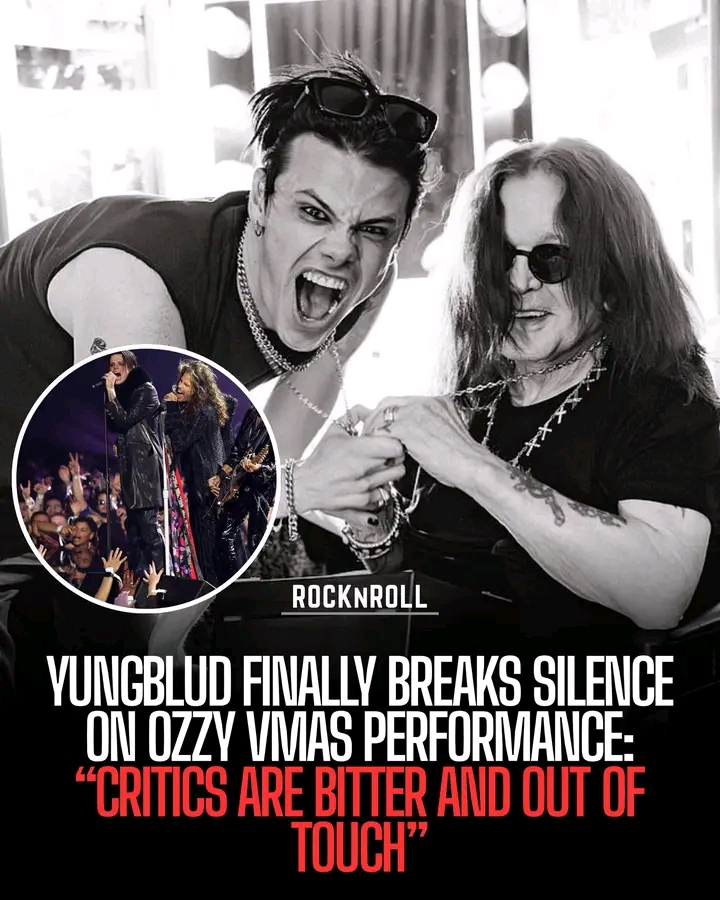
When Yungblud stepped onto the MTV VMAs stage to honor Ozzy Osbourne, he understood he was walking into a minefield. The legends were watching. The fans were watching. And the critics? They were already sharpening their knives. His tribute—a whirlwind performance of energy, emotion, and raw rock spirit—was met with polarized reactions. While some praised his boldness and heartfelt homage, others were quick to dismiss it as over-the-top or disrespectful. The backlash hit social media almost instantly, with hashtags trending and opinion pieces dissecting every movement, every note, every word.
But Yungblud did not retreat into the shadows. On Jack Osbourne’s Trying Not to Die podcast, he addressed the criticism head-on. With characteristic candor, he explained that honoring a legend like Ozzy was never about perfection—it was about spirit, passion, and connection. “I know I’m not Ozzy,” he said, voice steady but charged with emotion, “and I’m not trying to be. I’m just trying to carry the flame, to show that his music still means something to this generation.” He emphasized that genuine homage often comes with risk, and true artistry sometimes challenges comfort zones.
In responding, Yungblud reframed the narrative. He wasn’t apologizing; he was contextualizing, insisting that reverence and authenticity mattered more than consensus. “Criticism will always exist,” he added, “but if your heart is in the right place, that’s what counts. That’s what Ozzy would have wanted.” By confronting the backlash with honesty and passion, Yungblud turned a potential PR disaster into a declaration of artistic integrity, proving that honoring a legend sometimes requires walking boldly into the storm rather than avoiding it.