When Led Zeppelin took the stage, it wasn’t just a concert—it was an earthquake in musical form. Known for their explosive live performances, the band pushed every boundary of volume, power, and endurance. Their shows weren’t just loud—they were mythically loud. Stacked with towering Marshall amplifiers, they created a wall of sound that slammed into the crowd like a jet engine. Fans didn’t just hear the music; they felt it in their bones.
One of the most infamous examples came in 1969 when Zeppelin tore into a ferocious version of “Heartbreaker” that reportedly peaked at an ear-shattering 130 decibels. That’s the audio equivalent of standing behind a fully revved Boeing 747 at takeoff. The sheer volume was enough to cause instant hearing damage—yet fans craved it. No one left. No one wanted to miss a note, even if it meant their ears would ring for days.
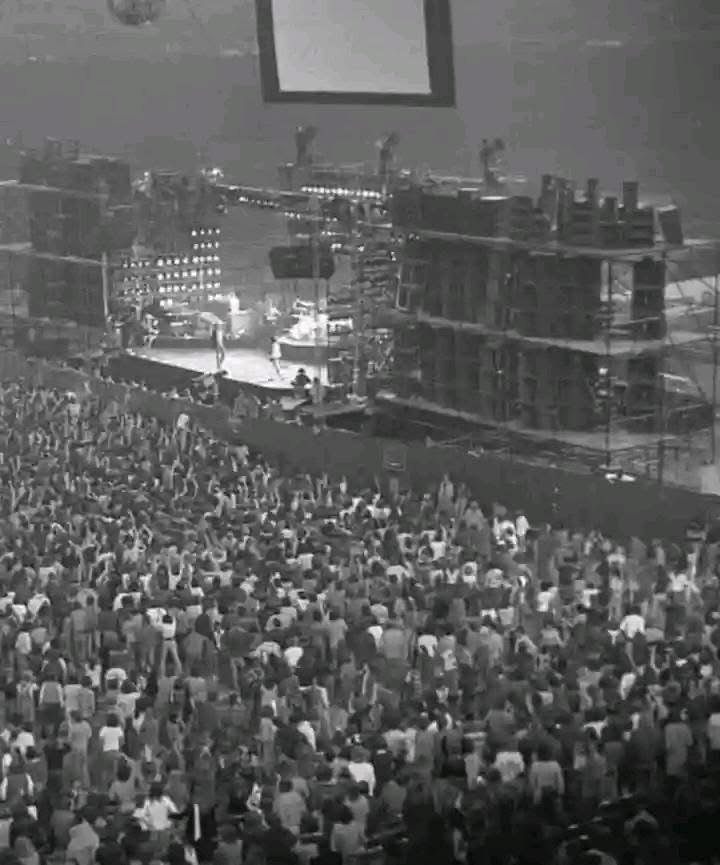
By the time of their legendary 1977 show at the Pontiac Silverdome in Michigan, Zeppelin had grown into a colossus of live rock. With over 76,000 fans in attendance—then a record for an indoor concert—the band delivered a two-and-a-half-hour sonic barrage. Jimmy Page’s guitar screamed through double stacks of Marshalls, Robert Plant’s voice soared, John Paul Jones’ bass thundered, and John Bonham’s drums could level cities.
Photographs from that night show a sea of flickering lighters, swirling fog, and lights illuminating the band like gods on Olympus. It wasn’t just a gig—it was a religious experience. Every solo was longer, every note louder, every scream more primal. Led Zeppelin didn’t just play rock ‘n’ roll—they weaponized it. And for the thousands inside the Silverdome, it was gloriously unforgettable.