




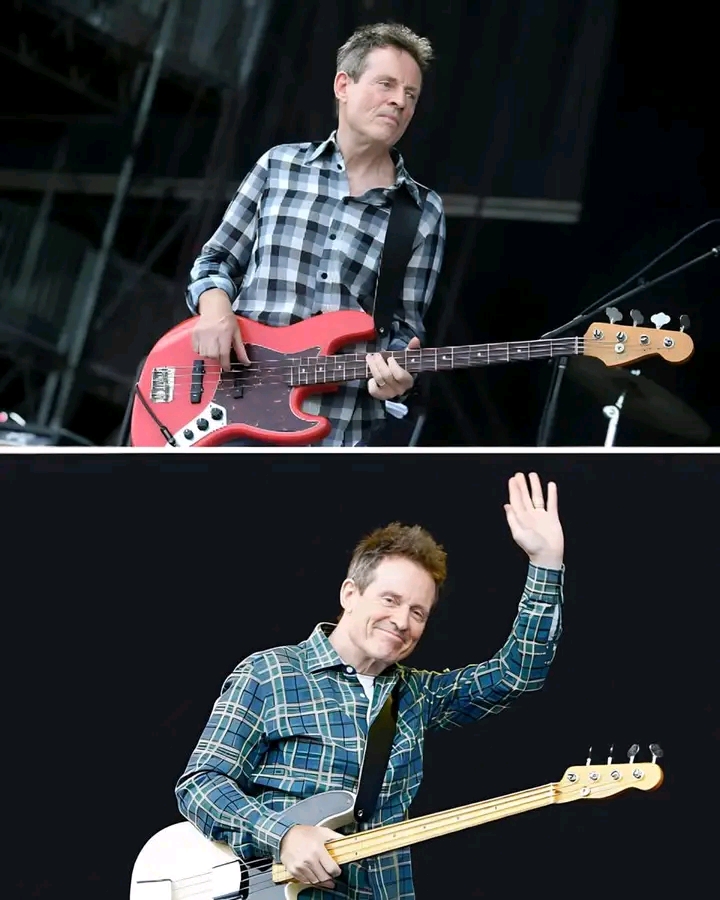
**The Quiet Genius: Why John Paul Jones Was Led Zeppelin’s Unsung Hero**
In a band known for thunder and spectacle, John Paul Jones was the calm eye of the storm — the quietest member of Led Zeppelin, and arguably its most essential.
While Robert Plant’s wailing vocals and Jimmy Page’s electrifying guitar solos defined the band’s sound for millions, it was Jones who built the scaffolding. As both bassist and keyboardist, he brought a multi-instrumental prowess that grounded their chaos and elevated their artistry. From the haunting Mellotron on “Kashmir” to the slippery funk groove of “Trampled Under Foot,” his fingerprints are on Zeppelin’s most daring musical moments.
Before Zeppelin, Jones was already a veteran of the studio world — arranging, composing, and playing for icons like The Rolling Stones, Dusty Springfield, and Donovan. That wide-ranging experience gave him a depth of musical knowledge that would prove crucial as Zeppelin pushed boundaries. He wasn’t just the rhythm section — he was the architect. His subtle arrangements and genre-defying instincts helped Zeppelin evolve from a heavy blues band into something mythic and transcendent.
Jones never craved the spotlight. He rarely smashed guitars or strutted across stages. But when he did step forward — like with the eerie church organ on “No Quarter” or the delicate mandolin on “Going to California” — the results were unforgettable. His work shimmered in the background, always serving the song, never demanding attention.
After Zeppelin disbanded, Jones stayed true to his curious, collaborative spirit, working with artists across the spectrum — from Diamanda Galás to Them Crooked Vultures — and composing for film and theater.
In the end, John Paul Jones may not have been the loudest member of Led Zeppelin, but he was its foundation. Without his vision and versatility, the band’s towering legacy might never have t
aken flight.