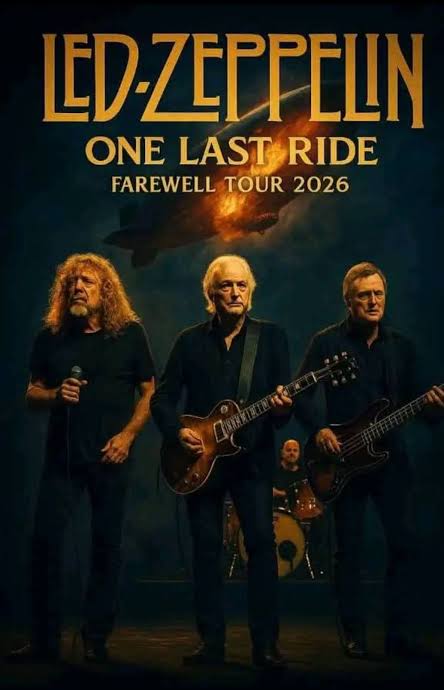





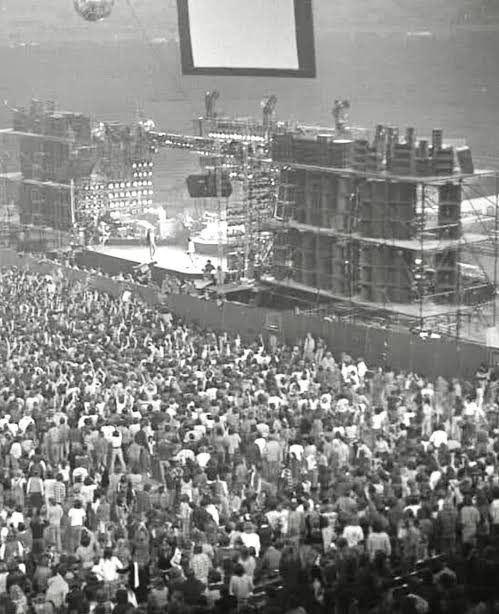
Two of the last known photographs from Led Zeppelin’s final U.S. show carry a haunting weight — the end of an era that no one, not even the band, could have predicted. Taken on July 24th, 1977, at the Oakland Alameda County Coliseum, they capture Robert Plant, Jimmy Page, John Paul Jones, and John Bonham at the height of their power, commanding a sea of 55,000 fans. The energy was electric, the music transcendent — a testament to a band that had conquered America like few others before or since.
As the final notes faded and the California sun began to set, Robert Plant addressed the roaring crowd with words that now echo with bittersweet finality: “Thanks a lot folks, see you again soon.” Neither he nor anyone else could have known that America would never see Led Zeppelin perform again. Only weeks later, tragedy struck when Plant’s young son, Karac, died suddenly — bringing the remainder of the 1977 tour to an abrupt and permanent halt.
It had all begun nearly nine years earlier, on December 26th, 1968, when an unknown British band took the stage as an unbilled support act for Vanilla Fudge in Denver, Colorado. That night marked the beginning of one of rock’s most extraordinary love affairs — between Led Zeppelin and the American audience. From tiny clubs to sold-out arenas, the band’s rise was meteoric, powered by thunderous performances and an unmatched musical chemistry.
By the time of that final Oakland show, Zeppelin were rock royalty, adored and unstoppable. Yet behind the scenes, fate was already at work, quietly closing a chapter. Those two photographs now stand as powerful relics — reminders of a band that changed music forever and of the final moment America shared with the might of Led Zeppelin.