





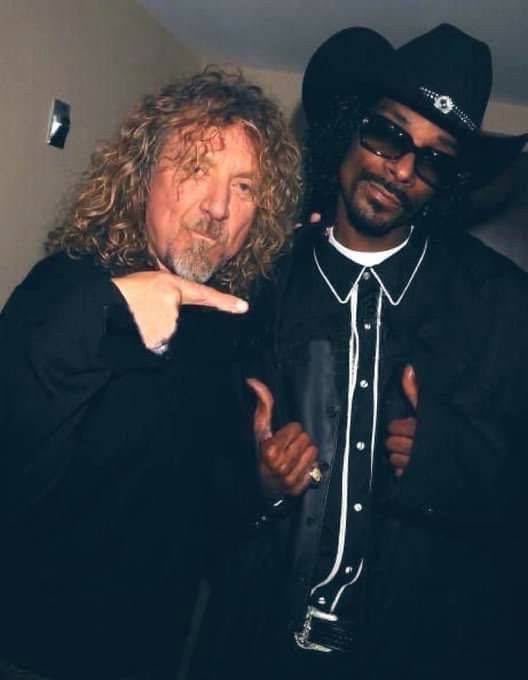
Robert Plant and Snoop Dogg may hail from vastly different musical backgrounds—Plant as the legendary frontman of Led Zeppelin and pioneer of hard rock, and Snoop Dogg as one of hip-hop’s most recognizable voices—but both have had a profound and lasting influence on music culture. What unites them is not genre, but a fearless spirit of innovation, reinvention, and authenticity.
Plant helped define the sound and mythos of 1970s rock, blending blues, folk, and mysticism into a genre-defining legacy. Yet, his post-Zeppelin career has been marked by an adventurous embrace of diverse styles, from world music to Americana, often pushing far beyond the boundaries of traditional rock. Similarly, Snoop Dogg emerged in the early 1990s as a laid-back yet lyrical force in West Coast hip-hop, and he has remained relevant across decades by constantly reinventing himself—whether through funk-infused albums, reggae explorations, or ventures into gospel and even cooking shows.
Both artists have shown a deep respect for musical heritage. Plant’s collaborations with artists like Alison Krauss demonstrate his appreciation for roots music, while Snoop has often paid homage to the pioneers of funk, soul, and early hip-hop, even working with icons like Dr. Dre and Bootsy Collins. Their genre-bending partnerships and openness to experimentation reflect not just artistic curiosity, but a broader cultural impact.
Importantly, they’ve inspired generations of musicians to stay true to themselves. Neither Plant nor Snoop Dogg has allowed trends to dictate their path. Instead, they’ve turned evolution into a personal signature—using music as a vessel to express identity, challenge norms, and connect with audiences across time. Their enduring appeal lies in their ability to bridge eras and styles, making them both timeless symbols of creativity, individuality, and artistic freedom.