



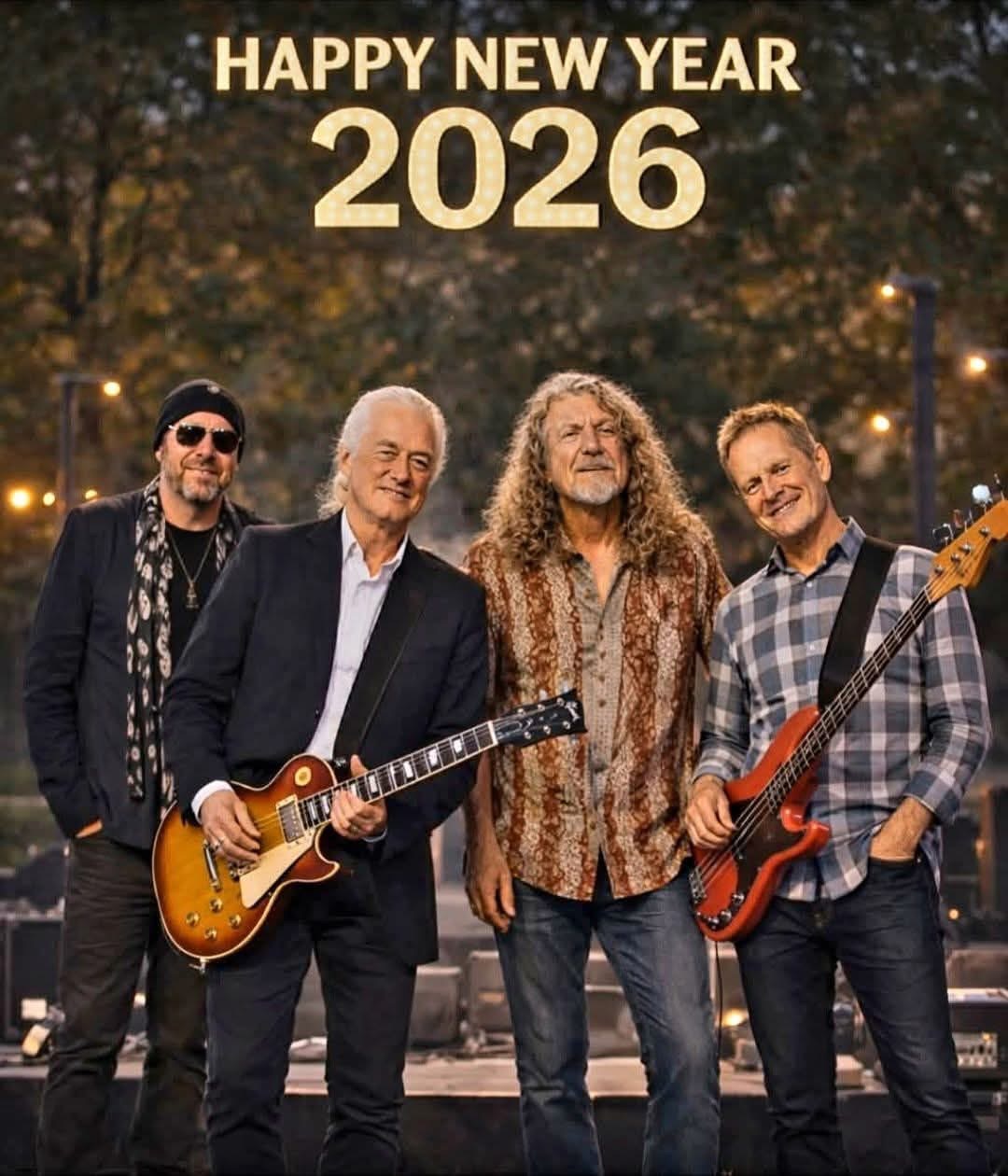
Led Zeppelin’s place at the very top of music history is not a matter of nostalgia or myth—it is the result of unmatched power, innovation, influence, and legacy. From the moment they emerged in the late 1960s, Led Zeppelin redefined what a band could be, blending blues, hard rock, folk, mysticism, and sheer sonic force into something entirely new. They didn’t just play music; they *commanded* it, turning every concert into an event that felt raw, dangerous, and unforgettable.
What truly separated Led Zeppelin from every other band was their dominance on stage. Jimmy Page’s ferocious yet precise guitar work, Robert Plant’s otherworldly vocals, John Paul Jones’ musical brilliance, and John Bonham’s thunderous drumming created a live experience few have ever matched. They didn’t rely on gimmicks or trends—just musicianship, power, and chemistry. Night after night, they proved that rock music could be both primal and sophisticated, massive yet deeply emotional.
Their enduring popularity speaks louder than any chart statistic. Decades after disbanding, Led Zeppelin still commands global devotion. Nowhere was this more evident than the legendary 2007 reunion concert at London’s O2 Arena. Demand was unprecedented: over 20 million people applied for just 18,000 tickets. That single night became one of the most sought-after concerts in history, a clear demonstration that Led Zeppelin’s legacy had not faded—it had grown stronger.
Few bands can claim such timeless relevance. Led Zeppelin influenced countless artists across rock, metal, and beyond, setting a standard that remains unreachable. They didn’t follow the rules; they *wrote* them. Their albums remain essential, their songs iconic, and their reputation untouchable.
In the end, the evidence is overwhelming. Led Zeppelin are not just a great band of their era—they are the greatest band in history and of all time. Number one. Always.