




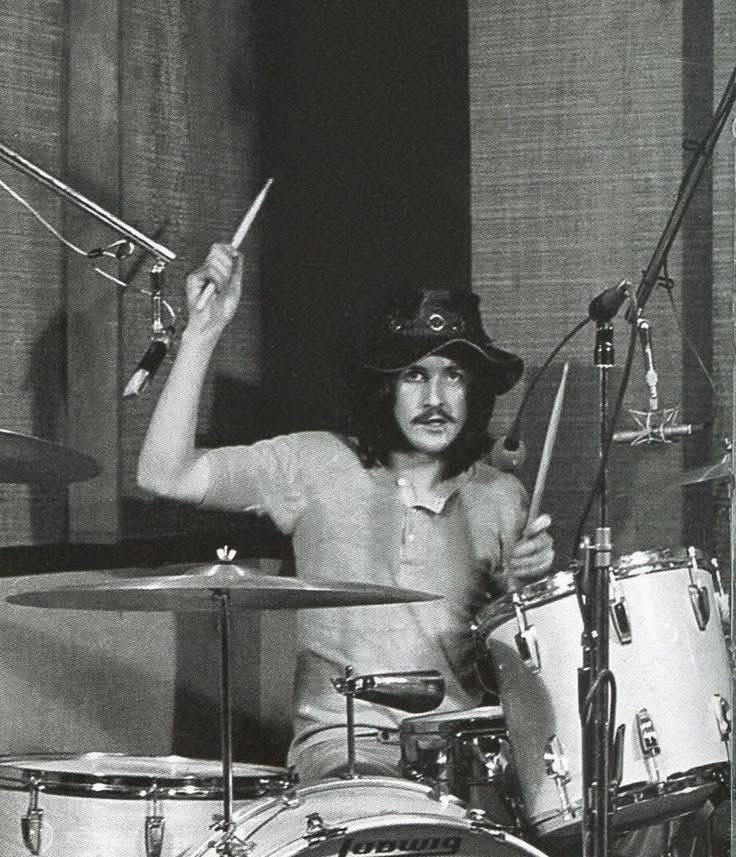
John Bonham’s artistry extended into every corner of his playing—from the thunderous downbeats to the tiniest ghost notes tucked between grooves. His drumming wasn’t just heard—it was felt, deep in the chest, like a heartbeat powering the machine of Led Zeppelin. With his intuitive use of dynamics, syncopation, and inventive sticking patterns, Bonham added a depth and texture to the band’s sound that turned even the simplest rhythms into epic statements. His signature triplets and lightning-fast bass drum work—performed with a single pedal—on tracks like “Good Times Bad Times” shattered conventional expectations of rock drumming.
What set Bonham apart wasn’t just his power, but his precision and musicality. He could swing hard, groove deeply, and explode with jaw-dropping fills, all while maintaining a rock-solid sense of time. He made the drums a lead instrument, commanding attention without overshadowing the band. His playing was loud, yes—but it listened. Studio engineers often marveled at how effortlessly he made drums sound massive and musical. His natural ear for tuning and striking meant his kit didn’t just keep time—it sang.
Offstage, Bonham was known for his fierce loyalty to his bandmates and deep love for his family. He was a man of humor and heart, who lived with intensity and passion. Though his life ended tragically at just 32, his legacy is etched into the foundation of modern rock. Every thunderous stadium beat, every ambitious young drummer hammering out a Bonzo-inspired fill, keeps his spirit alive. More than a drummer, John Bonham was a force of nature—one whose influence still reverberates through every snare crack and cymbal crash across generations.