





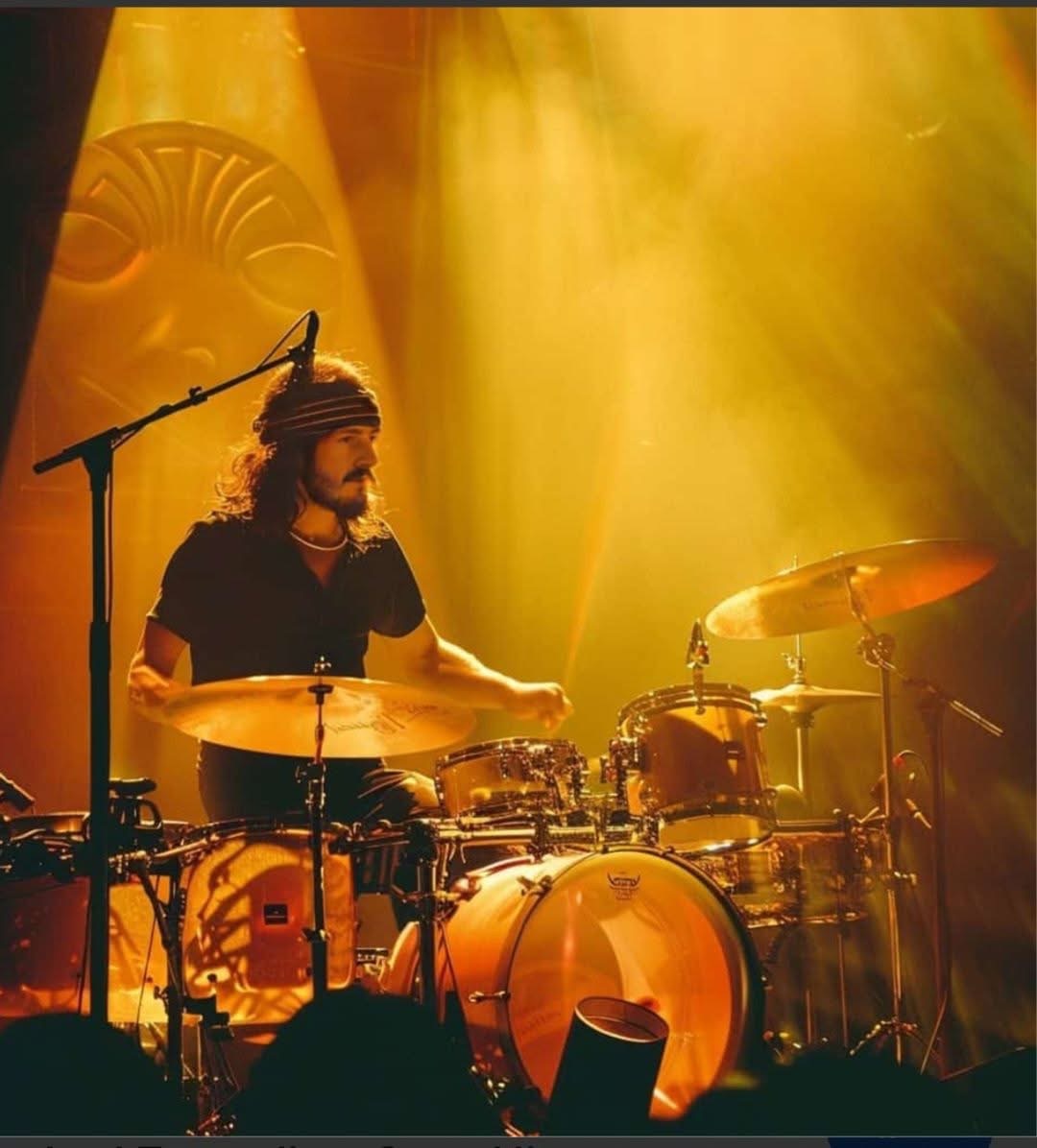
John Bonham, forever known as “Bonzo,” redefined what it meant to be a rock drummer. At a time when drummers were often treated as timekeepers, Bonham emerged as a commanding musical force—equal parts engine, architect, and soul of the band. As a founding member of Led Zeppelin, his immense power, speed, and unmistakable behind-the-beat feel became the foundation upon which the group’s sound was built. Using heavy sticks, wide-open tuning, and a thunderous Ludwig kit, Bonham created a drum tone that was both brutal and deeply musical.
What truly set Bonham apart was his ability to fuse styles. His playing carried the swing of jazz, the grit of blues, and the weight of industrial power—often all within the same song. This balance is perhaps best showcased in his legendary live performances of **Moby Dick**, where extended drum solos saw him abandon sticks entirely, playing barehanded with astonishing control and expression. These moments were not displays of excess, but demonstrations of his profound connection to rhythm itself.
In the studio, Bonham was equally visionary. Working closely with Jimmy Page, he helped pioneer massive, atmospheric drum sounds—most famously on **When the Levee Breaks**, where his booming groove echoed through stairwells and redefined rock recording techniques. His fearless use of triplets, syncopation, and unconventional time feels challenged the limits of 1970s rock drumming.
Bonham’s death in 1980 brought Led Zeppelin to an immediate end, a testament to how irreplaceable he was. Yet his legacy lives on—not only through generations of drummers inspired by his mastery, but also through his son, Jason Bonham. More than volume or speed, John Bonham is remembered for the soul, swing, and humanity he brought to heavy music. For many, that is why he remains the greatest drummer of all time—number one, without equal.