




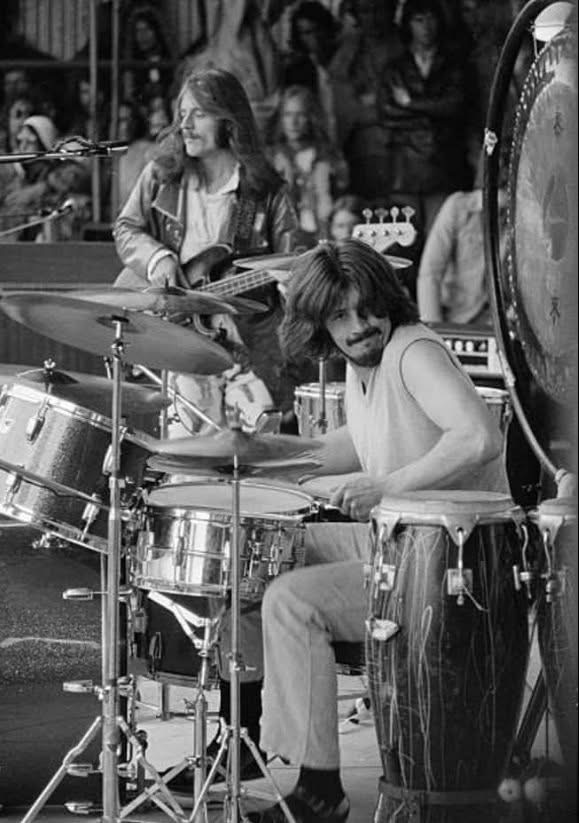
John Bonham and John Paul Jones were integral to the musical power and innovation of Led Zeppelin, forming one of the most formidable rhythm sections in rock history. Bonham, affectionately known as “Bonzo,” was a drumming virtuoso whose thunderous playing and flawless timing became a defining element of the band’s sound. Known for his explosive solos, particularly the iconic “Moby Dick,” Bonham combined sheer force with technical mastery, infusing every performance with raw emotion and intricate rhythms. His ability to seamlessly blend power with subtlety set a new standard for rock drumming and influenced generations of musicians.
Equally vital was John Paul Jones, the band’s versatile multi-instrumentalist. As the bassist, he crafted deep, grooving lines that anchored the band’s songs while adding melodic complexity. Yet his talents extended far beyond the bass—Jones played keyboards, mandolin, and contributed significantly to the band’s arrangements and songwriting. His classical training and broad musical knowledge helped shape the band’s sonic diversity, from the haunting organ on “No Quarter” to the lush orchestration in “Kashmir.” Jones’ quiet but essential presence brought depth and texture to Zeppelin’s sound, often serving as the glue that held the band’s adventurous compositions together.
Together, Bonham and Jones formed a rhythm section that was both technically precise and emotionally charged. Their chemistry laid the foundation for the soaring guitar work of Jimmy Page and the electrifying vocals of Robert Plant. Without their dynamic interplay and musical intelligence, Led Zeppelin’s groundbreaking fusion of blues, rock, folk, and Eastern influences would not have reached the same heights. Bonham and Jones weren’t just supporting players—they were the engine of the band, driving its creativity and innovation. Their legacy endures as a benchmark for rhythm sections across all genres of music.