




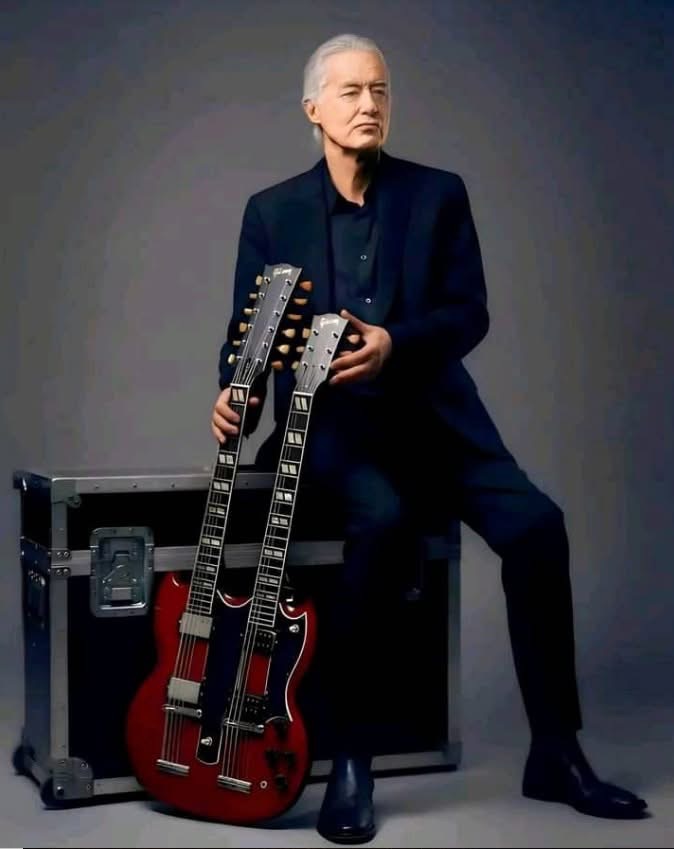
From *Led Zeppelin II* onward, Jimmy Page carved his sonic legacy with a distinctive arsenal of guitars and groundbreaking techniques that redefined rock music. At the heart of his setup was a sunburst 1959 Gibson Les Paul Standard, famously acquired from Joe Walsh, paired with thunderous Marshall amplifiers. This combination delivered the warm, powerful tone that became synonymous with Led Zeppelin’s heavier sound. While the Les Paul dominated much of his electric work, Page’s studio ingenuity revealed a broader palette. For the acoustic layers on *Led Zeppelin III* and *IV*, including tracks like “Going to California” and “The Battle of Evermore,” he turned to the Harmony Sovereign H-1260, a relatively modest instrument that produced rich, resonant tones both in studio and on stage during the early ‘70s.
Before the Les Paul became his mainstay, Page relied on his Fender Telecaster—a gift from Jeff Beck. This guitar, with its bright, cutting tone, was crucial in the recording of the iconic “Stairway to Heaven” solo, as well as much of the band’s debut album. For live renditions of “Kashmir” and other exotic-sounding pieces, Page embraced the Danelectro 3021, tuning it to DADGAD to explore Middle Eastern-inspired soundscapes.
Perhaps Page’s most distinctive contribution to rock guitar was his pioneering use of a cello bow. Inspired by classical session musician David McCallum Sr., Page began drawing a bow across the strings of his guitar—first his Telecaster, then his Les Paul—creating eerie, otherworldly textures on songs like “Dazed and Confused” and “How Many More Times.” These dramatic bowing interludes became centerpieces of Zeppelin’s live performances, showcasing Page’s flair for theatricality and sonic innovation, and helping to cement his place as one of the most original guitarists in rock history.