





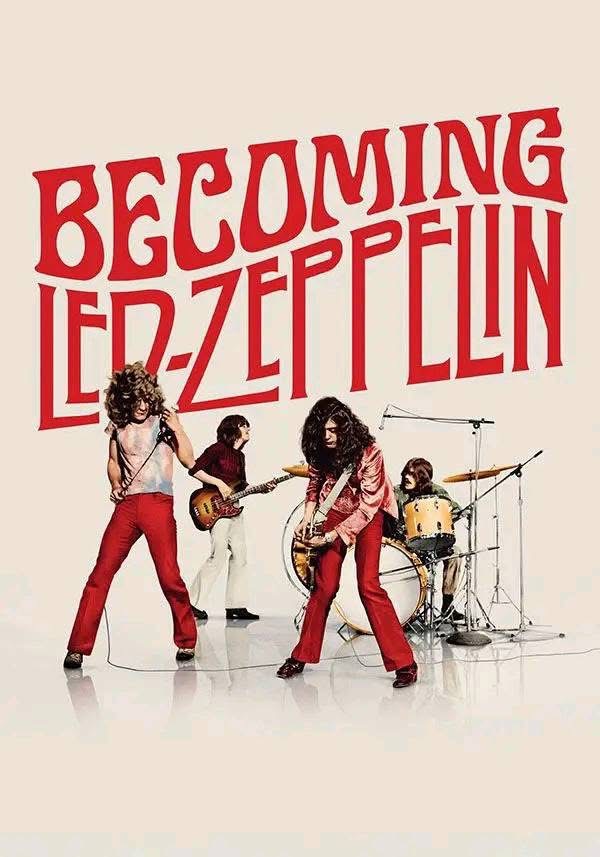
MOVIE REVIEW: Becoming Led Zeppelin
Becoming Led Zeppelin opens not with commentary, but with sound and spectacle—“Good Times Bad Times” roars over live concert footage, immediately immersing the viewer in the sonic force that defined the band. Intercut with this are evocative black-and-white reels from World War II, including a May 1945 newspaper front page, grounding Zeppelin’s story in the context of a post-war Britain rebuilding itself—both physically and culturally. The band members’ birth in the 1940s and the emotional residue of the war seem to echo in their music. As Jimmy Page notes, “at the end of the Second World War, there was this great feeling of hope towards the future”—a duality of hardship and optimism that would later surface in their sound.
The documentary’s approach is refreshingly direct: let Zeppelin tell their story. Through intimate interviews with Jimmy Page, Robert Plant, and John Paul Jones, the film charts the band’s evolution while offering fans rare insights. These new interviews are interwoven with archival material and powerful musical performances, allowing the music to narrate as much as the words do.
While early sequences about the members’ childhoods—baby pictures, school parades, and family recollections—may feel like filler to the casual viewer, the deeper reward lies in their musical foundations. Here, Becoming Led Zeppelinshines: substantial clips from artists who shaped Zeppelin’s sound—Little Richard, Gene Krupa, Shirley Bassey, Sonny Boy Williamson, and more—trace the band’s DNA. One highlight: Little Richard’s electrifying rendition of “Long Tall Sally,” played with one leg on top of the piano, capturing the wild abandon that Zeppelin would soon channel.
Ultimately, Becoming Led Zeppelin is less a biography than a layered origin myth—one crafted by the band themselves. For fans, it’s an immersive tribute. For newcomers, it’s an invitation to witness how legends are made.