





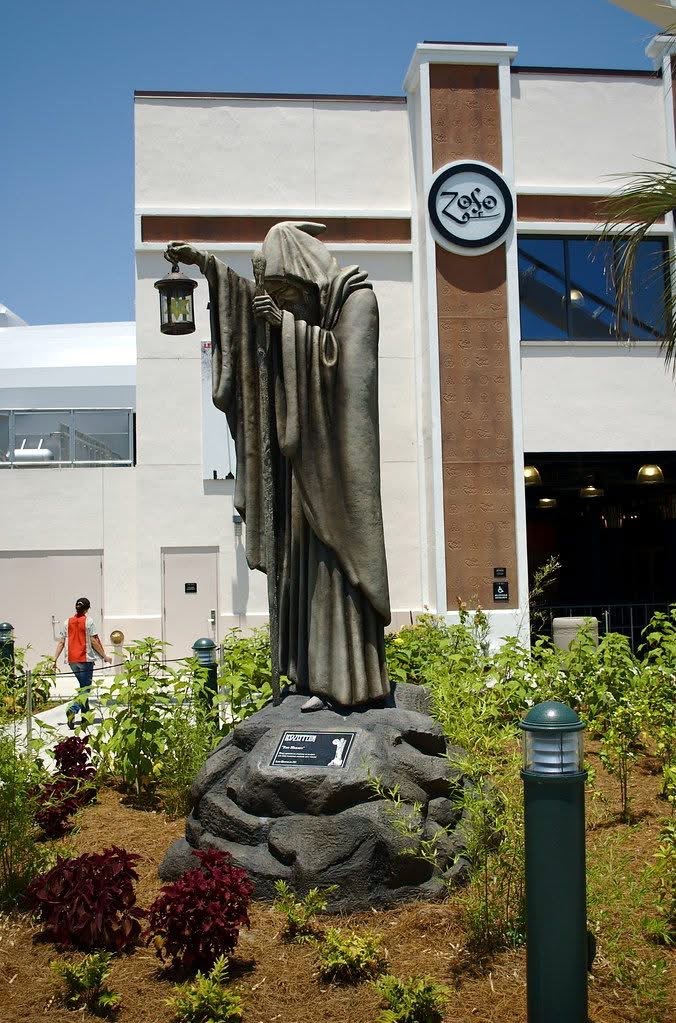
At the now-defunct Hard Rock Park in Myrtle Beach, South Carolina, one of the most iconic and mystifying symbols of rock history was brought to life: a statue of the Hermit from Led Zeppelin’s legendary fourth album, *Led Zeppelin IV*. This statue was a striking three-dimensional representation of the cloaked, lantern-bearing figure that appeared on the album’s inner sleeve—a symbol that evoked solitude, wisdom, and mysticism, inspired by the tarot card of the same name.
Hard Rock Park, which briefly operated from 2008 to 2009, was a theme park entirely dedicated to rock music, featuring rides and attractions based on legendary bands. One of its most celebrated and ambitious areas was the “Led Zeppelin – The Ride,” a roller coaster set to the soaring riffs of “Whole Lotta Love.” Near the queue line and within the themed environment stood the statue of the Hermit, placed atop a craggy pedestal that mimicked the rugged, fantasy-like terrain from the album’s artwork.
Towering and enigmatic, the statue was more than just a tribute to Led Zeppelin; it was a powerful visual anchor in a park meant to immerse visitors in rock history. Fans of the band recognized it instantly and saw it as a reverent nod to the mythos Zeppelin had carefully crafted throughout their career. The Hermit stood as a reminder of the band’s mystical aesthetic and their resistance to mainstream branding—even as their influence permeated every corner of pop culture.
Though Hard Rock Park closed only months after opening, the Hermit statue remains a memorable symbol of the park’s bold vision. For a brief moment, it transformed Zeppelin’s mythology into something fans could see and feel—an ephemeral monument to the magic of classic rock.