





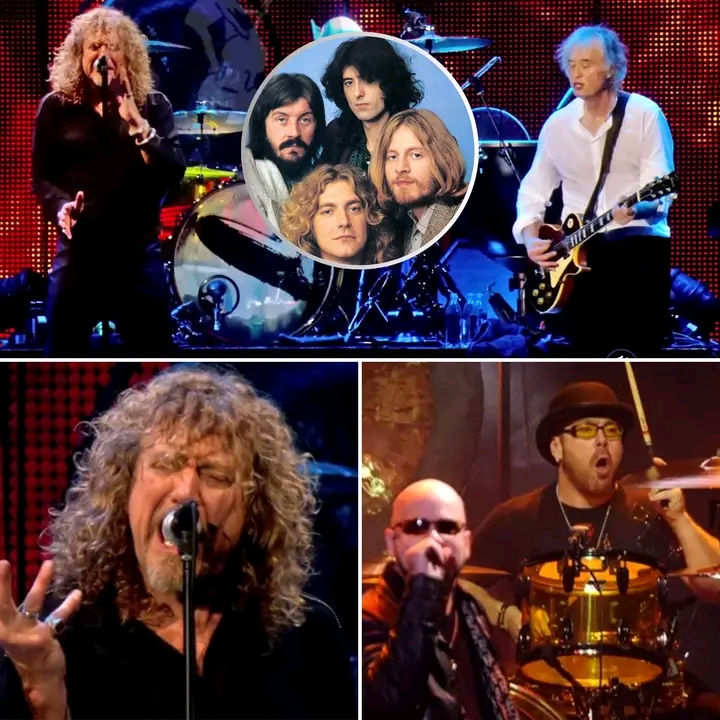
After 27 years apart, Led Zeppelin did the unthinkable. On December 10, 2007, in London’s O2 Arena, Robert Plant, Jimmy Page, and John Paul Jones reunited for a single, earth-shaking performance — joined by Jason Bonham, son of the late John Bonham, on drums. It wasn’t just a concert; it was a resurrection. And when the first thunderous notes of “Kashmir” rang out, time seemed to stop. The air pulsed with electricity. For a moment, the world stood still.
Fans from every corner of the globe had waited decades for this — a chance to witness rock’s Mount Olympus rise once more. And Zeppelin didn’t disappoint. With Plant’s golden voice soaring, Page’s guitar roaring like a storm, Jones’s masterful bass and keys grounding it all, and Bonham’s fierce, faithful drumming, the band didn’t just revisit their past — they reignited it.
“Kashmir,” with its hypnotic rhythm and towering grandeur, was more than a highlight — it was a statement. The sound was massive, alive, and transcendent. It echoed across generations, proving that their legacy wasn’t a memory — it was still very much alive.
The setlist that night was a treasure trove: “Black Dog,” “Dazed and Confused,” “Stairway to Heaven,” and more — each delivered with reverence and fire. Yet it was “Kashmir” that encapsulated everything Led Zeppelin ever was: bold, mystical, untamed.
The 2007 reunion wasn’t followed by a tour, despite global demand. But that only made the moment more mythic — a singular, powerful flash of lightning across the sky of rock history. For those lucky enough to be there, it was a once-in-a-lifetime experience. For everyone else, it remains a symbol of what music can be: timeless, transformative, and capable of stopping the world in its
tracks.