




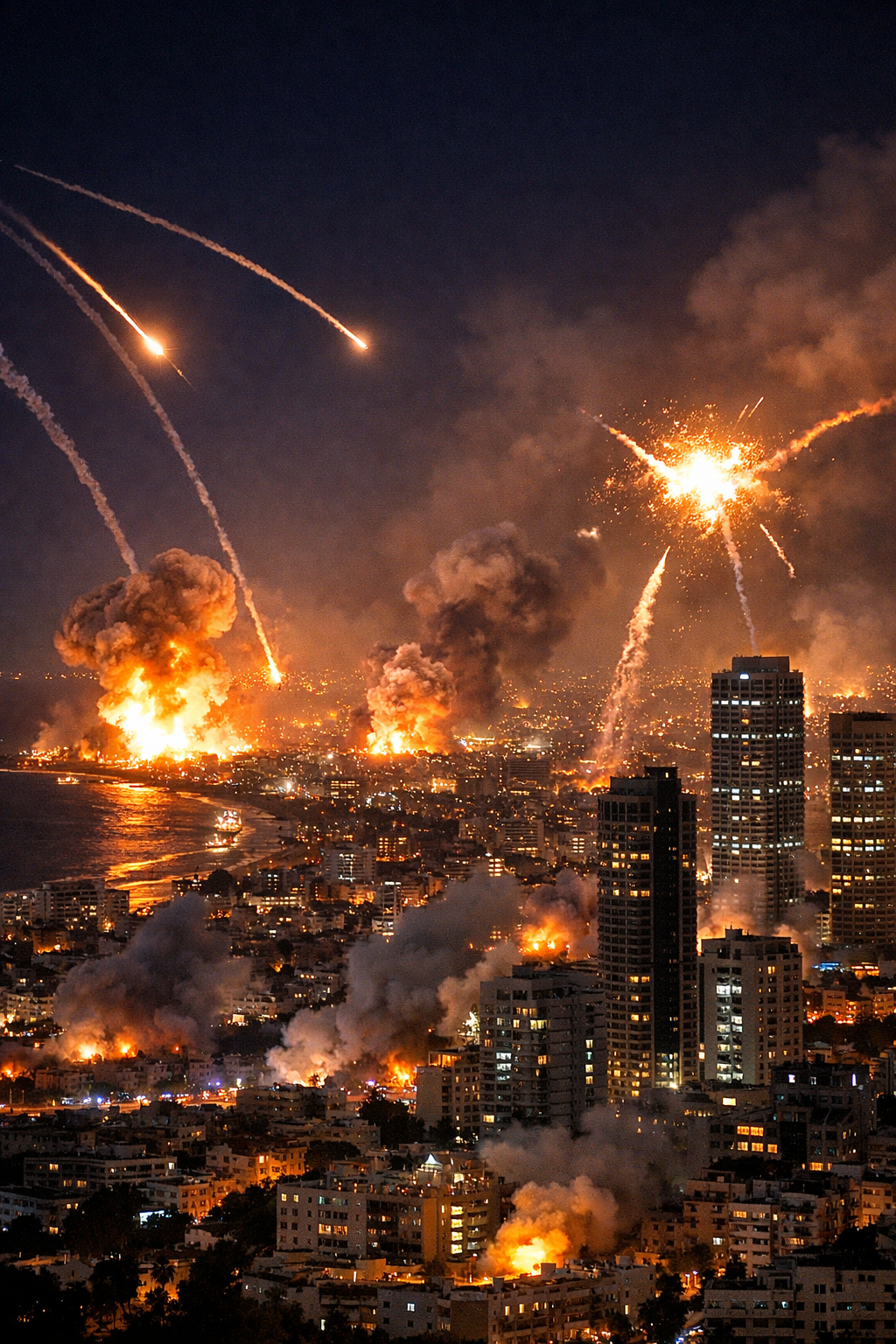
Reports of explosions over **Tel Aviv** have sent shockwaves across the region following claims that **Iran** launched a direct retaliatory strike targeting central **Israel**. According to initial accounts circulating on social media and regional outlets, air raid sirens sounded across the metropolitan area as residents rushed into bomb shelters. Bright flashes were seen in the night sky, with what appeared to be interceptor missiles attempting to neutralize incoming projectiles.
The **Israel Defense Forces** (IDF) reportedly activated aerial defense systems within moments of detection. While official confirmation on casualties or structural damage remains limited, emergency services have been deployed across multiple districts as authorities assess the situation.
If verified, this development marks a significant escalation in long-simmering hostilities between Tehran and Jerusalem. Direct strikes between the two nations have historically been rare, with tensions more often playing out through proxy conflicts and covert operations. A confirmed missile exchange would signal a dangerous new chapter, raising fears of a broader regional confrontation.
Global powers are closely monitoring events, with diplomatic channels likely working behind the scenes to prevent further escalation. Analysts warn that any sustained exchange could draw in additional actors across the Middle East, increasing the risk of a wider conflict with far-reaching geopolitical and economic consequences.
Residents in Tel Aviv have been urged to remain near protected areas and follow official guidance as defense systems remain on high alert. Meanwhile, international markets and political leaders are reacting cautiously as the situation unfolds.
At this stage, information remains fluid and should be treated carefully until verified by multiple credible sources. The coming hours will be critical in determining whether this incident remains contained — or becomes the spark for a much broader and more dangerous confrontation.