





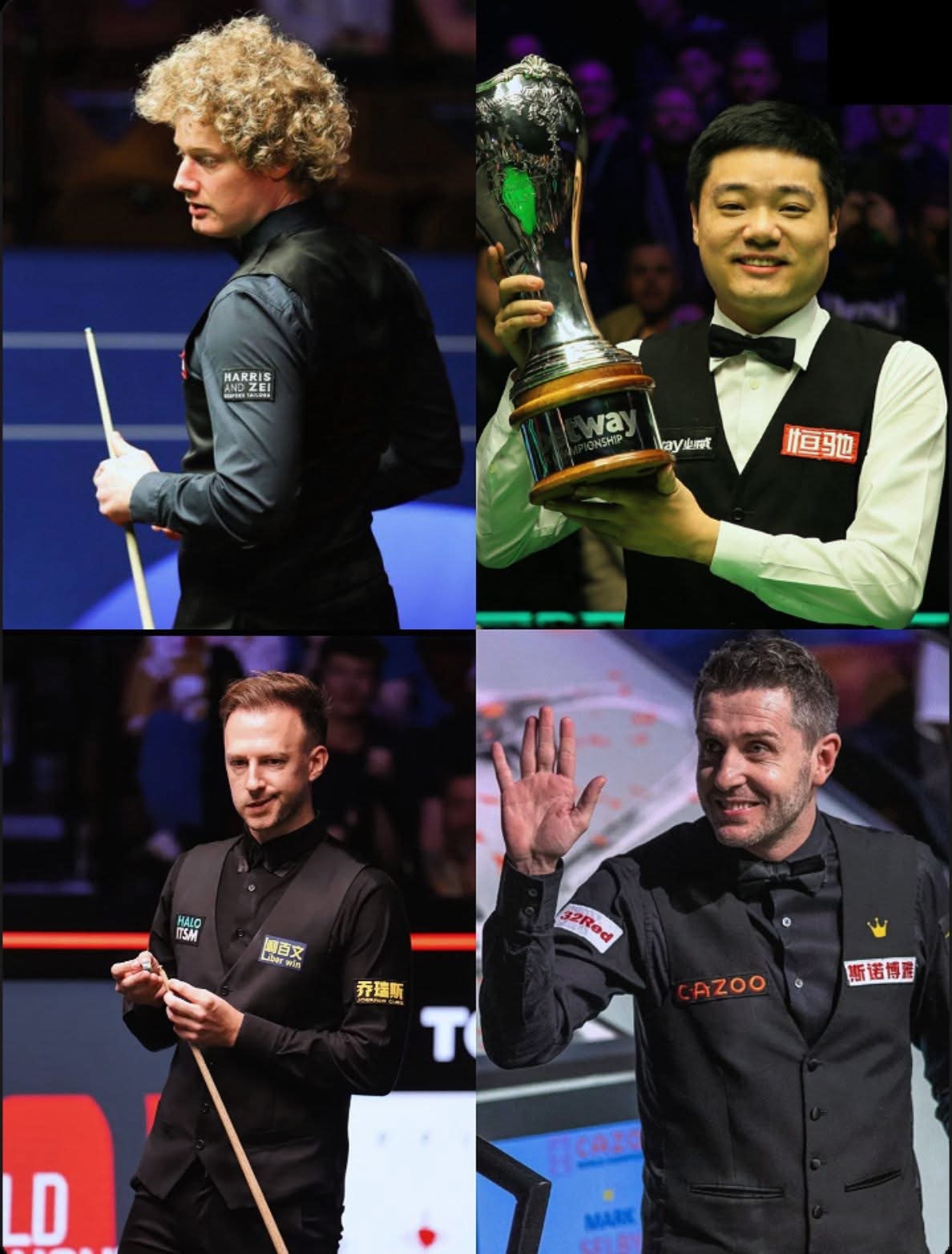
In a sport as layered and unforgiving as snooker, asking *“One Gotta Go”* is less about disrespect and more about revealing what we truly value in greatness. When the choices are **Judd Trump’s flair**, **Mark Selby’s tactical game**, **Neil Robertson’s scoring**, and **Ding Junhui’s precision**, the decision becomes brutally difficult. But one *does* have to go.
Trump’s flair is the modern sport’s heartbeat. His audacity, cue power, and imagination have redefined what is possible, dragging snooker into a more expressive, attacking era. Remove that flair and the game loses its edge of excitement, its willingness to gamble brilliance over safety.
Selby’s tactical game, meanwhile, is snooker’s conscience. His matchplay intelligence, safety mastery, and psychological resilience are the tools that win championships when pressure is suffocating. Take that away, and the sport risks becoming a break-building exhibition rather than a battle of minds.
Robertson’s scoring is pure devastation. Few players in history convert chances as ruthlessly. When in flow, frames barely breathe before they’re gone. His heavy scoring punishes mistakes instantly, forcing opponents into near-perfection. Strip that from the game, and the margin for error suddenly widens too much.
Which leaves Ding’s precision.
Ding’s cueing is poetry—clean, exact, and beautifully balanced. His timing and technical purity have inspired generations, particularly across Asia. But when forced into elimination, precision alone is the most *replaceable* trait. Other elite players can replicate it in patches; few can replicate Trump’s imagination, Selby’s tactical stranglehold, or Robertson’s relentless scoring power.
So, reluctantly, Ding’s precision is the one that has to go.
Not because it lacks beauty—but because snooker, at its highest level, survives on flair, warfare, and firepower. Precision, sadly, becomes the sacrifice.