





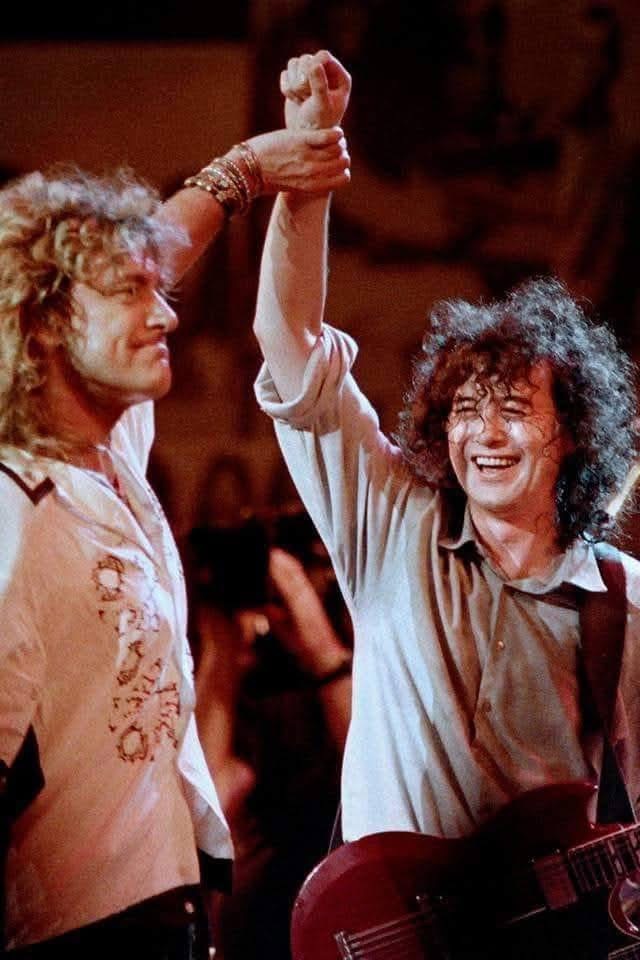
The dynamic between **Robert Plant** and **Jimmy Page** was the true engine that powered **Led Zeppelin**, but as Plant himself has acknowledged, it was Page who drew the map. While Plant became the unmistakable face and voice of the band, he has consistently deferred to Page as the visionary architect behind their sound. His description of Page’s playing as “a little left of heaven” perfectly captures the guitarist’s balance between technical mastery and dangerous unpredictability.
Page didn’t simply write riffs or solos; he constructed entire sonic environments. Through alternative tunings, unorthodox bowing techniques, and meticulous studio layering, he forged a heaviness that felt deliberate rather than brute. This “premeditated” weight gave Zeppelin its towering presence and, crucially, created space for Plant’s voice to explore extremes of range, emotion, and mythology. Page’s production mind was as important as his guitar work, turning the studio into an instrument and redefining what a rock band could sound like.
Plant has admitted that in the band’s early years, he functioned largely as a foil to Page’s vision. Over time, however, that relationship evolved. As Plant grew in confidence, he began to steer lyrical themes and vocal approaches, expanding Zeppelin’s identity beyond blues-based roots into something more expansive and poetic. That growth never diminished Page’s role; instead, it strengthened the partnership.
At the heart of their collaboration was mutual respect rather than rivalry. Page’s willingness to take musical risks emboldened Plant to push his own boundaries, and vice versa. Alongside **John Paul Jones** and **John Bonham**, they didn’t merely write songs—they built monuments of sound. By defying the accepted structures of their time, Led Zeppelin reshaped rock music, leaving a legacy that still looms impossibly large.