





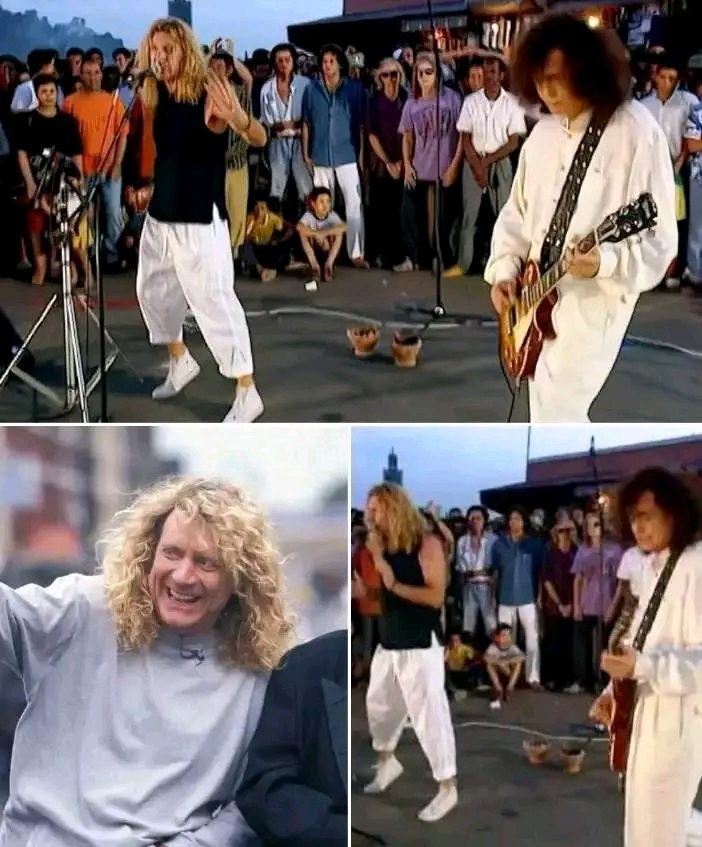
For the first time since the tragic loss of Led Zeppelin’s legendary drummer, John Bonham, 14 years earlier, Jimmy Page and Robert Plant defied all expectations and reunited—not to simply relive the past, but to boldly forge a new musical future. When the news broke in 1994, fans around the world held their breath, unsure of what to expect. What emerged was nothing short of revolutionary.
Rather than attempt to recreate Zeppelin’s iconic sound note for note, Page and Plant embraced the spirit of adventure that had always defined their best work. Their performances reimagined classic Zeppelin songs with a breathtaking new dimension—a seamless fusion of Egyptian melodies, Indian vocals, and the sweeping grandeur of the London Metropolitan Orchestra. Tracks like “Kashmir” and “The Battle of Evermore” took on a cinematic intensity, their familiar riffs soaring above exotic textures that transported listeners across continents.
But the true magic unfolded in Marrakesh, Morocco, where the duo collaborated with the legendary Gnawa musicians. Known for their trance-like rhythms and deep, blues-infused grooves, the Gnawa brought an ancient spiritual energy to the music. Under the North African sun, Page’s guitar intertwined with the sinter, while Plant’s voice rose and fell in perfect harmony with the chants and percussion. This wasn’t just a reunion—it was a cultural crossroads, a reinvention that honored Zeppelin’s legacy while expanding its boundaries.
The project, ultimately captured in the acclaimed *No Quarter: Jimmy Page and Robert Plant Unledded* special, proved that true artistry isn’t about nostalgia—it’s about evolution. By blending East and West, old and new, Page and Plant created a soundscape that was both timeless and boldly original, reminding the world why their music still matters.