





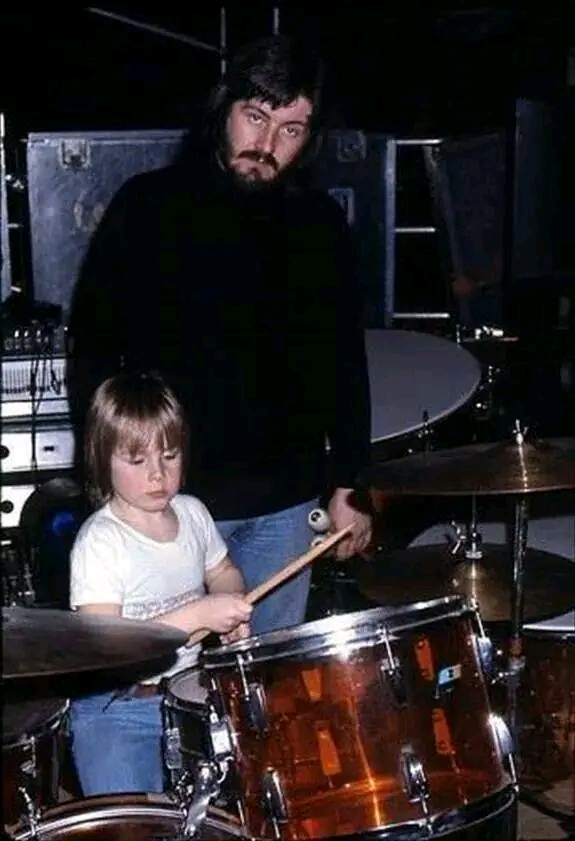
When engineers once told John Bonham he was “unrecordable” because of his sheer power and explosive drumming style, the Led Zeppelin legend didn’t tone it down—he proved them wrong. Known for his thunderous yet precise playing, Bonham’s response was simply to keep being himself, letting his natural feel and dynamics do the talking. Early on, some studio engineers struggled to handle the sheer volume and presence of his drums, often complaining that his sound would overpower everything else. But Bonham never saw his power as a problem. To him, it was a signature.
Everything changed when producer and engineer Glyn Johns stepped in. Rather than trying to suppress Bonham’s force, Johns embraced it, pioneering new microphone techniques to capture the full scope of his sound. By placing ambient mics strategically in the room, Johns allowed the natural acoustics to enhance Bonham’s massive grooves. The result wasn’t just drums—it was a living, breathing force that defined Led Zeppelin’s sound.
Tracks like “When the Levee Breaks,” “Good Times Bad Times,” and “Kashmir” showcase exactly why Bonham became a legend. His kick drum thundered like a cannon, his snare cracked like lightning, and his feel—impossible to fake—became the heartbeat of rock music. His refusal to conform to recording limitations changed the way drums were captured forever.
John Bonham didn’t need to adjust to the studio. The studio learned to adjust to him. What some called “unrecordable” became the gold standard for rock drumming. To this day, producers and drummers still study how his sound was achieved, trying to replicate the magic of a man who was simply being himself behind the kit. Bonham wasn’t just a drummer—he was a revolution.