




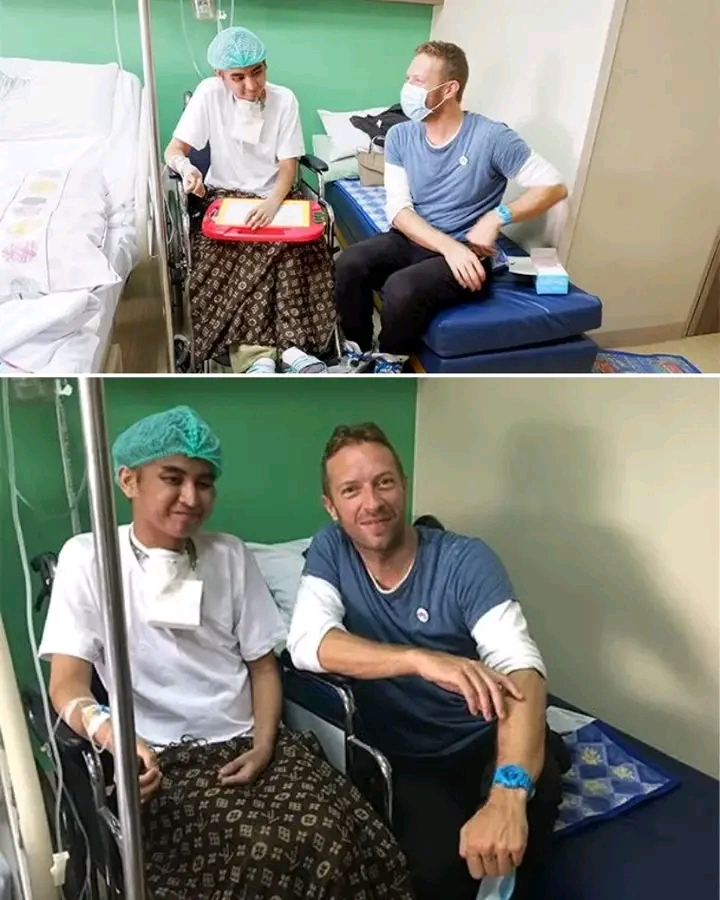
Hours before Coldplay’s Manila concert, Chris Martin took a private detour from the chaos of tour preparations to visit Ken Santiago, a young fan whose battle with stage 4 cancer had made attending the show impossible. In the quiet of Ken’s hospital room, the atmosphere was a stark contrast to the roaring stadium that awaited later that evening. Surrounded by medical equipment and the soft hum of machines, Ken’s eyes lit up when Martin entered, a familiar presence in the life of a fan who had drawn comfort from music through the hardest days.
Martin knelt beside him, asking the question that might have seemed ordinary to anyone else: “Which song would you like to hear?” Ken, too weak to speak, picked up a whiteboard and, with careful strokes, wrote a single word: “Ink.” The simplicity of the request held a weight of meaning—an earnest connection between artist and admirer, between music and hope. Chris Martin nodded, memorizing the request, his expression a mix of empathy and determination.
Later that night, under the dazzling lights of the Manila stadium, Martin’s voice rose above the crowd, and Coldplay began the opening notes of “Ink.” Before diving into the song, Martin paused, addressing the 60,000 fans who had gathered: “I’m sorry you can’t be here, Ken. I hope you get well soon. This one’s for you.” The stadium erupted, not just in applause, but in shared humanity—a recognition of music’s power to bridge gaps, to console, and to honor life’s fragile beauty.
In that moment, a concert transcended entertainment. It became a celebration of resilience, compassion, and the intimate ways in which music touches lives. Chris Martin’s gesture reminded everyone present that sometimes, the greatest performances are not measured by the decibels of a stadium, but by the quiet, profound connections forged between hearts. For Ken Santiago, “Ink” became more than a song—it was a symbol of hope and humanity that will linger long after the final note faded.