

**Led Zeppelin’s Paris Breakthrough: Olympia Theatre, October 1969**
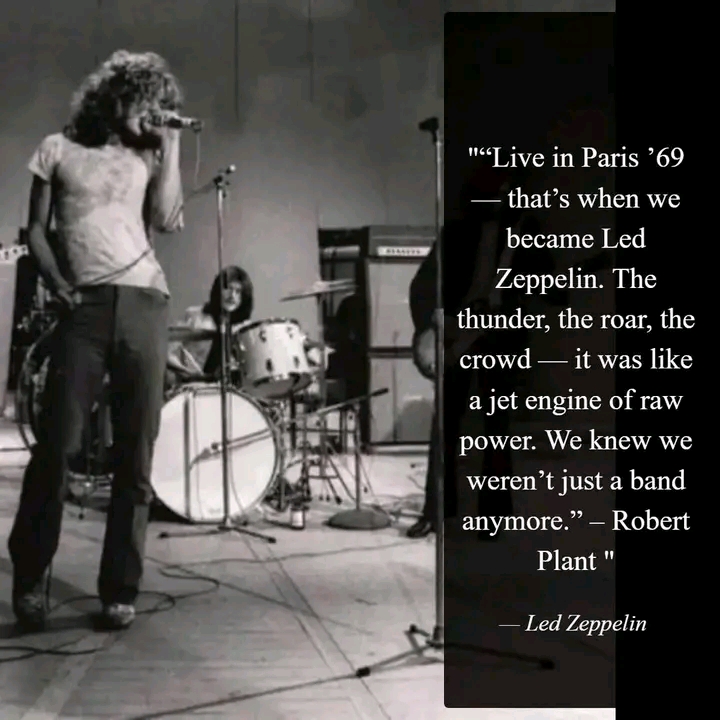
In October 1969, Led Zeppelin stormed the stage of the Olympia Theatre in Paris, delivering a performance that would etch itself into the mythology of rock. At the time, their self-titled debut album had already sent shockwaves through the music world, but it was this show that truly cemented their global presence. For the French audience—renowned for its discerning ear—Zeppelin brought not just a concert, but a seismic event.
From the first note, it was clear this wasn’t just another band on tour. Jimmy Page’s guitar work was electric, bending blues into something cinematic and raw. John Bonham pounded his drums with near-mythical force, while John Paul Jones anchored the chaos with his bass lines and subtle keyboard textures. And at the center of it all was Robert Plant, howling, wailing, and channeling something primal and timeless. Together, they didn’t just play songs—they created storms.
The Olympia setlist featured early classics like “Communication Breakdown,” “Dazed and Confused,” and “You Shook Me,” but in their hands, these tracks became sprawling, improvisational journeys. Each solo felt like a leap into the unknown, yet the band remained tightly locked in sync—a chemistry few acts have ever matched.
Though the concert was originally captured by French radio and passed around in bootlegs for years, it was eventually released officially, allowing fans to relive the magic. The recording crackles with energy, a time capsule of a band on the cusp of immortality.
For Led Zeppelin, Paris wasn’t just another date on the tour. It was a proving ground, a declaration that their sound could break language barriers and reshape musical boundaries. That night, in a historic theater in the heart of Europe, Zeppelin didn’t just perform—they transformed. And rock music would never be
the same.