





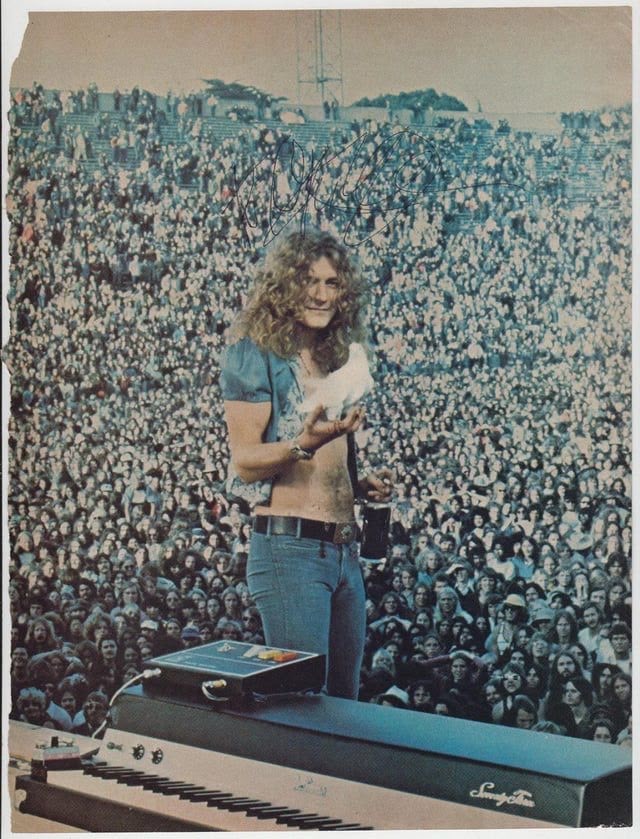
In 1973, during Led Zeppelin’s legendary performance in San Francisco, an unforgettable moment occurred that seemed almost mythical in its beauty. As Robert Plant reached the end of the iconic “Stairway to Heaven,” a white dove descended from above and gently landed on his outstretched hand. Caught in the golden stage lights, with his flowing blond hair, open shirt, and commanding presence, Plant looked almost ethereal—like a rock ‘n’ roll deity graced by nature itself.
This moment was not choreographed or expected. Doves had been released earlier as part of a promotional stunt by the concert organizers, but none had interacted with the band—until this one. The symbolism was powerful: as Plant delivered the final lines of “Stairway,” a song already steeped in mysticism and spiritual overtones, the dove’s arrival felt like a celestial seal of approval. The crowd gasped, and then roared in amazement. The image of Plant standing there, motionless except for the soft smile playing on his lips, the dove perched calmly on his hand, has since become one of the most iconic visuals in rock history.
Photographers and fans alike captured the moment, preserving it as a surreal testament to Led Zeppelin’s near-mythical status at the peak of their powers. To this day, that performance in San Francisco is remembered not just for its electrifying music, but for the almost divine symbolism of that fleeting encounter. In an era when rock concerts were wild, unpredictable, and full of spectacle, this quiet, tender gesture from nature stood out. It wasn’t just a concert moment—it became part of Led Zeppelin lore, a reminder of how music, mysticism, and the magic of live performance can sometimes align to create something truly transcendent.