





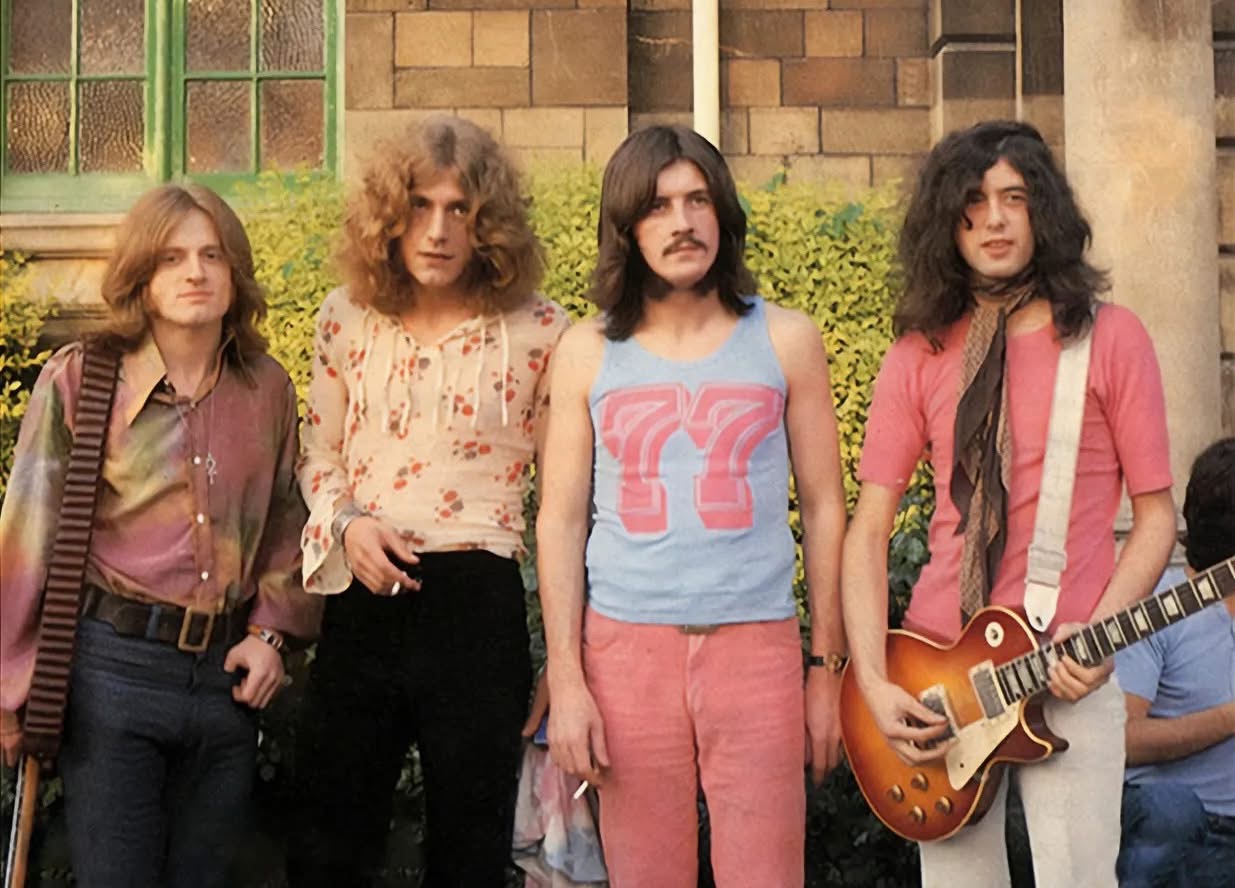
Led Zeppelin were an English rock band formed in London in 1968, consisting of Robert Plant (vocals), Jimmy Page (guitar), John Paul Jones (bass and keyboards), and John Bonham (drums). Widely regarded as one of the most influential rock groups in history, the band pioneered a powerful, guitar-driven sound that helped lay the foundation for both hard rock and heavy metal. Their music blended diverse influences, ranging from blues and psychedelia to folk and Eastern music, creating a dynamic and innovative sound that was both aggressive and experimental.
Led Zeppelin’s self-titled debut album, released in 1969, showcased their signature style—raw blues riffs, thunderous drumming, and soaring vocals. They quickly gained a massive following with subsequent albums such as *Led Zeppelin II*, *Led Zeppelin IV*, and *Physical Graffiti*, which featured iconic tracks like “Whole Lotta Love,” “Stairway to Heaven,” and “Kashmir.” Their emphasis on musical craftsmanship and extended instrumental sections set new standards for rock music performance and production.
The band also played a key role in shaping the modern music industry. They popularized the concept of album-oriented rock, where albums were treated as cohesive artistic statements rather than mere collections of singles. Additionally, their elaborate live performances and use of large venues helped establish the stadium rock format that became dominant in the 1970s.
Led Zeppelin disbanded in 1980 following the death of John Bonham, but their legacy endures. Their influence can be heard across generations of musicians, from metal bands to alternative rock artists. Inducted into the Rock and Roll Hall of Fame in 1995, they continue to be celebrated for their innovation, musicianship, and enduring impact on rock music and popular culture.