




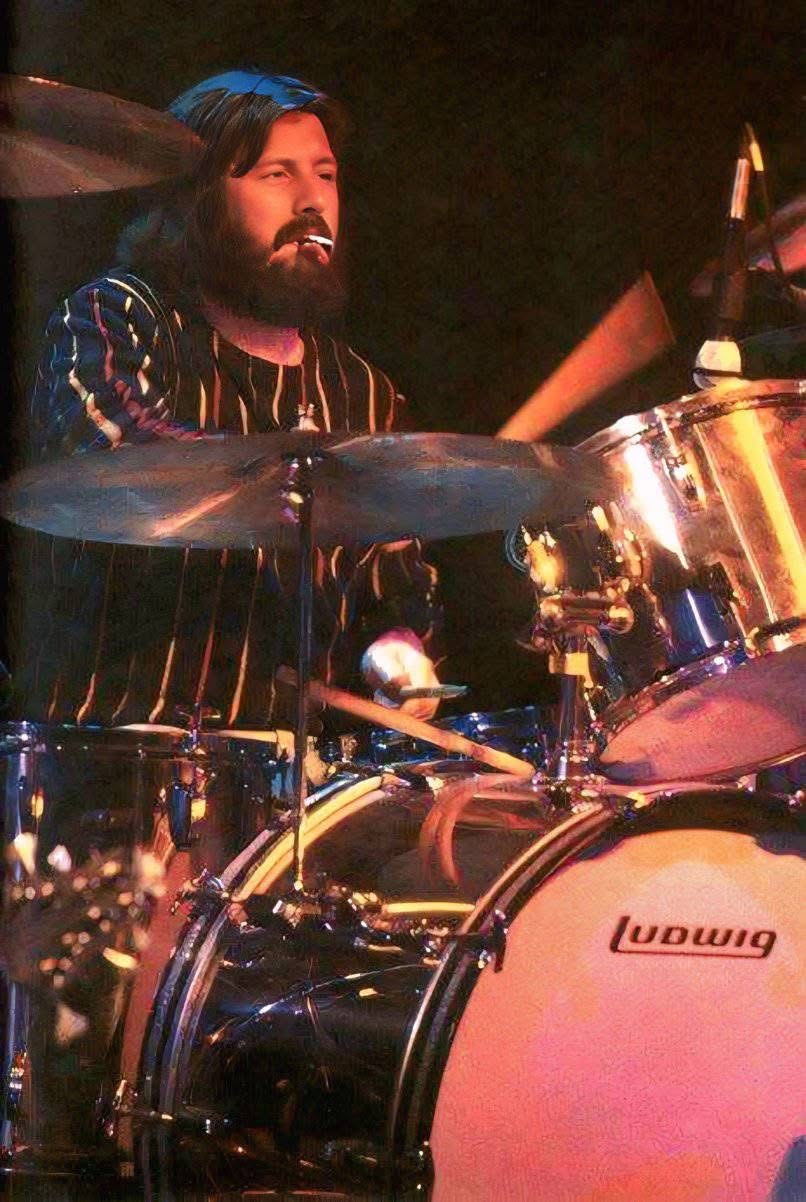
John Bonham’s genius as a drummer extended far beyond sheer power—his playing was deeply musical, emotional, and intuitive. He possessed an uncanny ability to serve the song while still making a powerful impression, using not just fills and flams, but also space and silence to elevate the music. His drumming was never just about keeping time; it was about creating mood, tension, and drive. Tracks like “Achilles Last Stand” and “In My Time of Dying” showcase his orchestral approach to the kit, where every beat pushed the band forward with purpose and energy.
Bonham’s unique sound was as much a product of his technique as it was of his creative experimentation. He favored a minimal drum setup, choosing quality over quantity, which allowed his precision and feel to shine through. His tuning was distinct, often lowering the pitch of his drums for a deeper, more resonant tone. He also embraced unconventional recording techniques, like placing his kit in stairwells to capture natural reverb, contributing to the massive, echoing drum sound that became a signature of Led Zeppelin’s recordings.
Yet, despite his dominance behind the kit, Bonham remained grounded. He frequently cited his influences—from jazz greats like Gene Krupa to big band legends—and always played with genuine passion. He understood the emotional core of music and used his instrument to enhance it, never overshadow it.
His sudden death in 1980 didn’t just mark the end of a life; it marked the end of Led Zeppelin, underlining how central he was to the band’s identity. To this day, John Bonham is more than a legend—he’s a benchmark for excellence in drumming. Across genres and generations, his influence endures, reminding us that true greatness lies in both power and purpose.