



Led Zeppelin were legendary not just for their groundbreaking studio albums, but for the raw power and sheer intensity of their live performances. Known for towering stacks of Marshall amplifiers and a stage presence that oozed rock ‘n’ roll energy, their concerts weren’t just shows—they were sonic assaults. The band cranked up the volume to truly ear-splitting levels, enveloping audiences in a wall of sound that could be felt as much as heard.
A hallmark of Zeppelin’s live legacy was their tendency to stretch songs far beyond their studio lengths. Tracks like “Dazed and Confused” and “Whole Lotta Love” often transformed into 20-minute epic journeys filled with improvisation, thunderous solos, and explosive crescendos. At these volumes, the band wasn’t just playing music—they were unleashing a full-blown sensory experience.
One of the most infamous moments came in 1969, during a performance of “Heartbreaker” that reportedly hit 130 decibels—a sound level comparable to standing directly behind a Boeing 747 jet engine at takeoff. At that volume, hearing damage can occur instantly. Yet for fans packed into sweaty arenas and stadiums, the risk seemed worth it. The sound, the spectacle, and the larger-than-life aura of Zeppelin on stage created moments of musical transcendence.
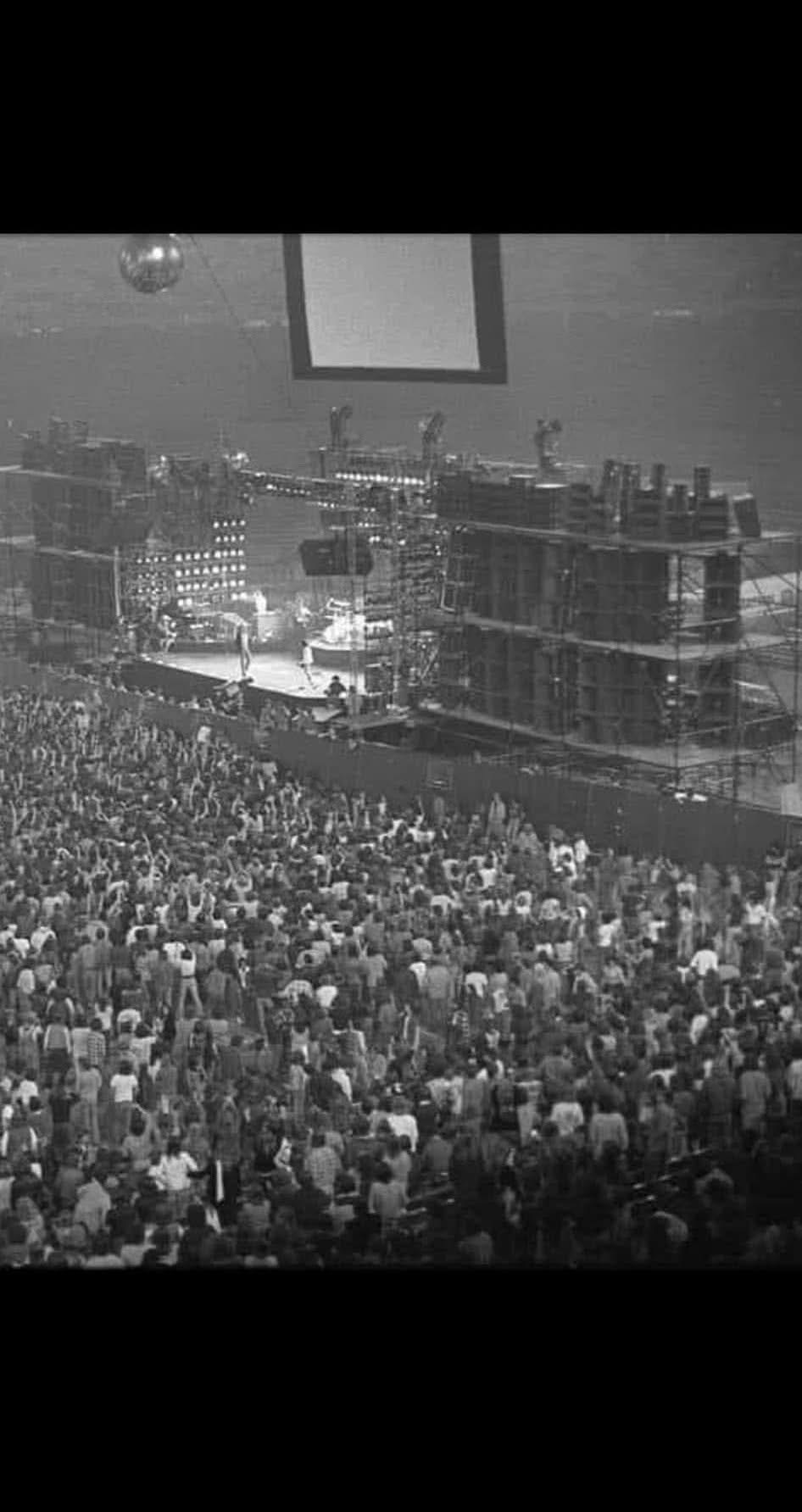
By 1977, during their mammoth U.S. tour, Led Zeppelin played to packed crowds in enormous venues like the Pontiac Silverdome in Michigan. A photo from that show captures the scale: a sea of fans, a vast stage drowned in light and smoke, and the band at its peak. The noise, the energy, and the power were off the charts—an unforgettable testament to why Led Zeppelin are still hailed as one of the greatest live acts in rock history.