





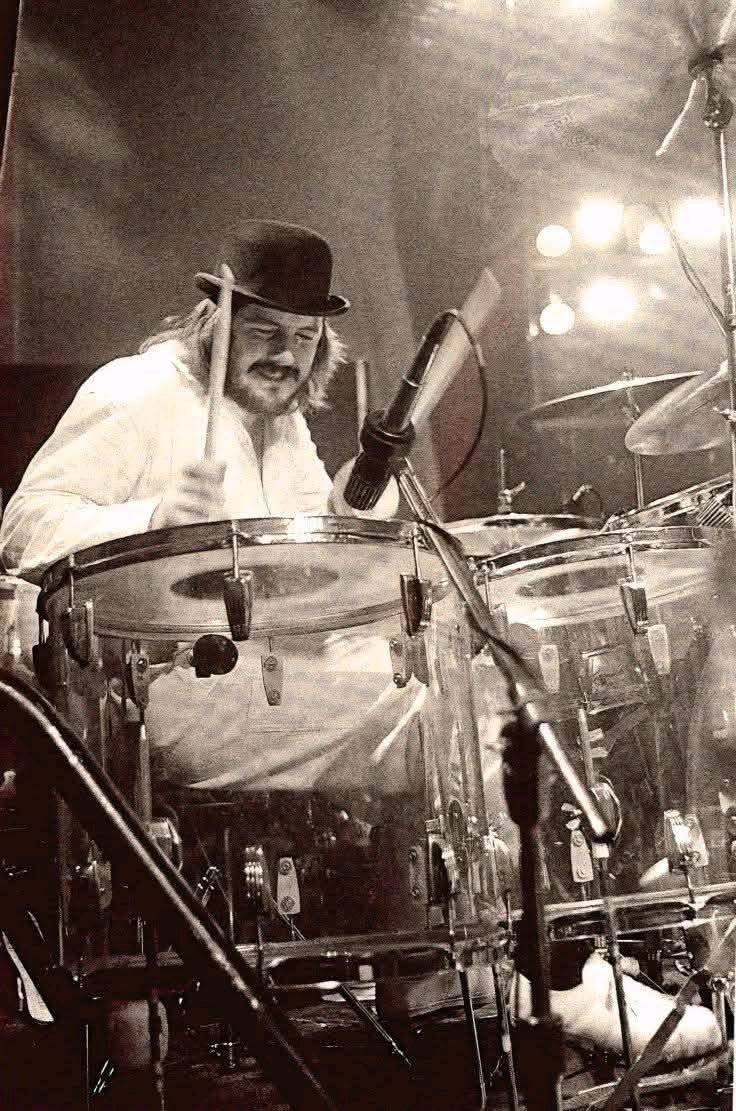
John Bonham’s impact on rock drumming went far beyond sheer power and speed—he fundamentally redefined the drummer’s role as a storyteller within the music. With an extraordinary command of rhythm, Bonham treated his drum kit as a dynamic, expressive instrument capable of conveying a wide spectrum of emotions, from fiery aggression to subtle restraint. His groundbreaking foot technique, especially on the bass drum, was revolutionary. Tracks like “Good Times Bad Times” showcased his astonishing ability to execute rapid double strokes using just a single pedal, a feat that astonished fans and fellow musicians alike.
Bonham’s unique ability to make heavy rock grooves swing gave Led Zeppelin a distinctive rhythmic feel that set them apart from their contemporaries. Unlike many rock drummers who focused solely on power, he brought a sense of groove and nuance, transforming pounding beats into compelling, danceable rhythms. Producers and engineers were often amazed at how Bonham’s raw playing could create an immense, full-bodied sound in the studio without heavy reliance on overdubs or effects.
His masterful control of dynamics—knowing exactly when to unleash thunderous energy and when to pull back—built the tension and release that became a hallmark of Zeppelin’s music. Even after his untimely death in 1980, Bonham’s influence remains undeniable, with the band choosing to disband rather than replace the irreplaceable. John Bonham didn’t just play the drums; he redefined rock drumming itself.