




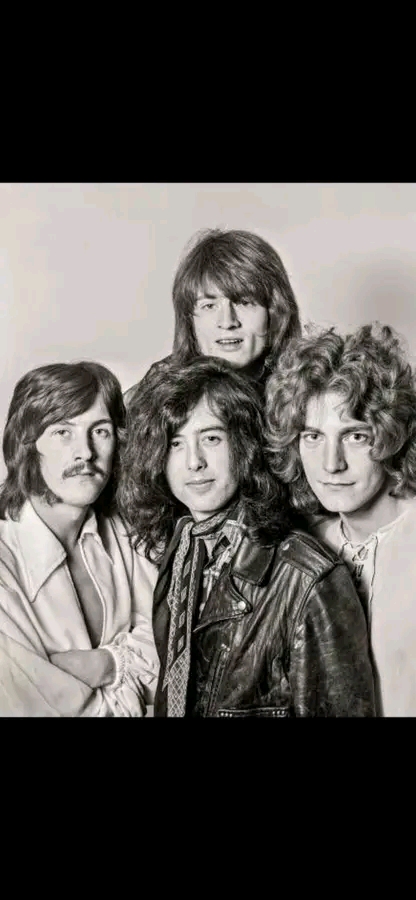
On 12 August 1969, in a cramped basement rehearsal space on Gerrard Street, London, four musicians met to see what might happen. Jimmy Page, Robert Plant, John Paul Jones, and John Bonham — each with their own history and reputation — plugged in, looked around, and chose a song. It was *Train Kept a Rollin’*, a gritty old Yardbirds number. What followed was less a rehearsal than a detonation.
John Paul Jones recalled the room as “wall-to-wall amplifiers,” with only a narrow space for the door. There was no set plan, no polished agenda — just the shared curiosity of musicians feeling each other out. But when the song began, something electric took hold. “The whole room just exploded,” Jones remembered, marveling at the sheer volume and force.
Robert Plant remembered the heat and the immediacy of the sound. It wasn’t just loud — it was alive. “I could feel that something was happening to myself and to everyone else in the room,” he said. “It felt like we’d found something… remarkable: the power.”
For Jimmy Page, the session confirmed his instincts. This was more than a good jam — it was a moment of ignition. “At the end, we knew that it was really happening, really electrifying,” he said. “Exciting is the word.” From that basement, they moved almost immediately toward rehearsals for what would become their first album.
John Bonham’s memories carried the same sense of inevitability. “Even the first time we’d played together, there’s a feeling when you’re playing whether it’s going to be any good,” he said. “And it was good — very good indeed.”
They couldn’t have known the full scope of what they’d begun. But in that small, overheated basement, the foundation of Led Zeppelin — and rock history — had just
been laid.